



Srimad Bhagavatam by Ved Vyasa: The Essence of Krishna Bhakti
Introduction
Among all sacred texts that emerged from the Vedic tradition Srimad Bhagavatam stands apart as a scripture of pure love and devotion. It is not simply a theological work or a historical Purana; it is the most intimate revelation of Krishna bhakti—the path of loving devotion to the Supreme Personality of Godhead. Composed by the great sage Ved Vyasa, Srimad Bhagavatam represents the mature culmination of all Vedic knowledge.
This article presents a complete, exploration of Srimad Bhagavatam by Ved Vyasa, focusing on why it is revered as the essence of Krishna bhakti. We will examine its origin, philosophical depth, devotional focus, and timeless spiritual relevance for seekers in every age.
Ved Vyasa: The Compiler of Vedic Wisdom
Vyasa’s Mission in Human History
Ved Vyasa occupies a unique position in spiritual history. He is traditionally known as the literary incarnation of divine wisdom who organized the vast body of Vedic knowledge for the benefit of humanity. His contributions include:
- Systematizing the four Vedas
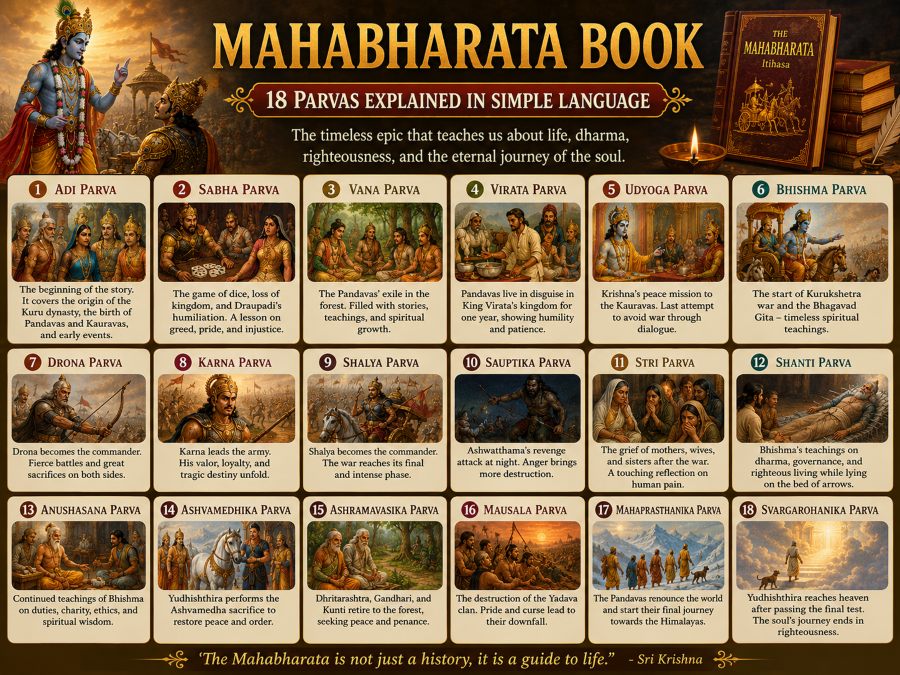
- Composing the Mahabharata
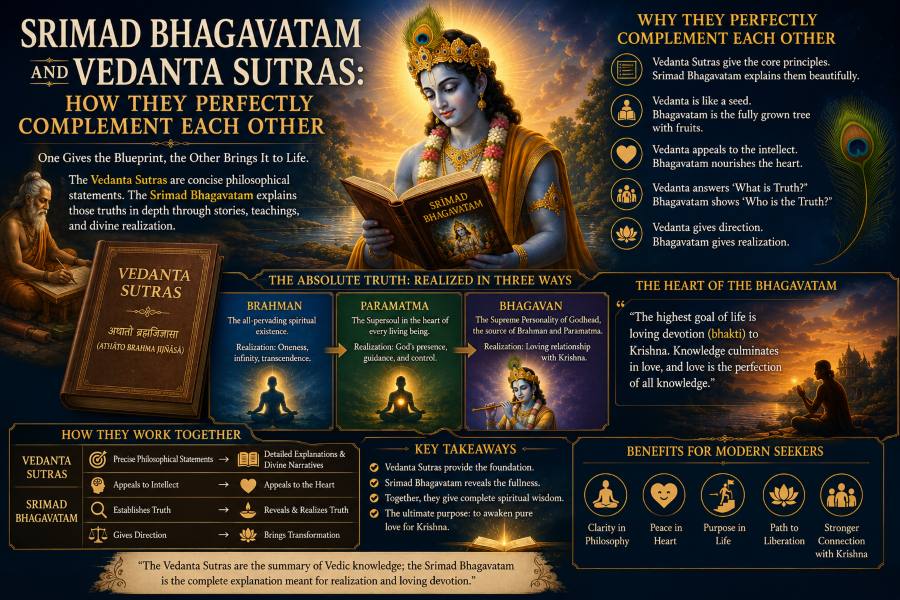
- Authoring the Vedanta Sutra
- Compiling numerous Puranas
Despite these monumental achievements, Vyasa felt an unexplained dissatisfaction within his heart. This inner emptiness revealed an important spiritual truth: knowledge alone does not fulfill the soul unless it culminates in devotion.
Narada’s Guidance and Vyasa’s Realization
Vyasa’s spiritual master, Narada Muni, revealed the cause of his dissatisfaction. Although Vyasa had presented philosophy, ethics, and ritual knowledge, he had not directly and exclusively glorified the personal pastimes and loving nature of Lord Krishna.
Following Narada’s instruction, Vyasa entered deep meditation. In a state of divine vision, he perceived the Supreme Lord along with His energies and understood the eternal position of the soul as Krishna’s servant. From this realization emerged Srimad Bhagavatam, Vyasa’s final and most intimate offering to humanity.
Srimad Bhagavatam: A Revealed Scripture of Devotion
Not a Human Creation
Srimad Bhagavatam is considered apauruṣeya—beyond ordinary human authorship. Although written by Vyasa, it is understood as divinely revealed knowledge, descending through the disciplic succession (parampara). This ensures the purity of its teachings and protects its devotional essence from distortion.
Unlike speculative philosophy, Srimad Bhagavatam speaks from realized truth. Its purpose is clearly stated at the very beginning: to reject materially motivated religion and establish pure devotional service as the highest goal of life.
The Natural Commentary on Vedanta
Ved Vyasa himself authored the Vedanta Sutra, a concise and philosophical summary of Vedic thought. However, Vedanta’s conclusions can be misunderstood without proper explanation. Srimad Bhagavatam serves as its natural commentary, explaining Vedanta not through logic alone but through devotion-filled narratives and realizations.
In this way, Srimad Bhagavatam completes Vyasa’s literary mission.
READ ALSO:- Garga Samhita
Structure of Srimad Bhagavatam
Srimad Bhagavatam is carefully structured to guide the reader from inquiry to realization.
Overview of Composition
- 12 Cantos
- 335 Chapters
- Approximately 18,000 verses
Each canto elevates the reader’s consciousness step by step, preparing the heart for the highest truths of devotion.
The Central Role of the Tenth Canto
While every canto is spiritually significant, the Tenth Canto is the heart of the Bhagavatam. It describes the childhood, youth, and divine pastimes of Lord Krishna in Vrindavan and Mathura.
These narratives are not symbolic stories. They are direct revelations of divine love, illustrating the highest expression of Krishna bhakti—where God becomes conquered by the love of His devotees.
Krishna Bhakti: The Heart of Srimad Bhagavatam
Bhakti as the Supreme Dharma
The central teaching of Srimad Bhagavatam is that bhakti-yoga is the highest occupation of the soul. Bhakti is not motivated by material gain, liberation, or intellectual pride. It is loving service performed solely for Krishna’s pleasure.
The Bhagavatam emphasizes devotion that is:
- Free from selfish desire
- Continuous and heartfelt
- Rooted in humility and surrender
Such devotion alone can fully satisfy the soul.
Krishna as the Supreme Personality of Godhead
Srimad Bhagavatam unmistakably declares Sri Krishna as Svayam Bhagavan—the original source of all incarnations. While other scriptures may emphasize divine power or cosmic control, Bhagavatam reveals Krishna’s sweetness, compassion, and intimate relationships with His devotees.
This personal revelation is the foundation of Krishna bhakti.
Devotional Narratives That Awaken the Heart
Krishna’s Divine Pastimes (Lila)
The Bhagavatam’s narratives of Krishna’s pastimes are central to its devotional power. From lifting Govardhan Hill to dancing with the gopis, each pastime reveals a different dimension of divine love.
Hearing these pastimes with faith purifies the heart and awakens dormant devotion. The Bhagavatam teaches that hearing itself is a spiritual practice, especially potent in the present age.
The Lives of Great Devotees
Srimad Bhagavatam glorifies devotees as much as it glorifies Krishna. Through the lives of Prahlada, Dhruva, Ambarisha, and others, it demonstrates how devotion transforms adversity into spiritual elevation.
These stories provide practical guidance for living a devotional life in any circumstance.
The Spiritual Significance of Srimad Bhagavatam
Transformation Through Devotion
The ultimate significance of Srimad Bhagavatam lies in its transformative effect. Regular reading and hearing cultivate:
- Detachment from material illusion
- Inner peace and clarity
- Compassion and humility
- Steady faith in Krishna
Rather than suppressing emotions, Krishna bhakti redirects them toward divine love.
Liberation Through Loving Service
Srimad Bhagavatam presents liberation not as void or impersonal merging, but as eternal loving service to Krishna. The soul retains individuality and experiences ever-increasing bliss through devotion.
This positive, love-centered liberation distinguishes Bhagavatam from purely renunciative paths.
Srimad Bhagavatam in the Vaishnava Tradition
Vaishnava lineages, especially the Gaudiya Vaishnava tradition, regard Srimad Bhagavatam as their supreme authority. Saints and teachers have relied on it as the ultimate expression of spiritual truth.
Daily study and discussion of Srimad Bhagavatam are considered essential practices for nurturing Krishna bhakti.
Relevance of Srimad Bhagavatam in Modern Life
In today’s world of anxiety, competition, and spiritual confusion, Srimad Bhagavatam offers clarity and purpose. It teaches balance—engaging responsibly with the world while remaining inwardly connected to Krishna.
Its message addresses universal human questions and provides a devotional path rooted in love rather than fear.
Why Srimad Bhagavatam Is the Essence of Krishna Bhakti
Srimad Bhagavatam is not merely about Krishna; it is Krishna experienced through devotion. It transforms philosophy into relationship and religion into love. Ved Vyasa’s final work stands as his greatest gift—guiding souls back to their eternal relationship with the Supreme Lord.
Conclusion
Srimad Bhagavatam by Ved Vyasa: The Essence of Krishna Bhakti reveals why this sacred scripture occupies the highest place in Vedic literature. Born from divine realization, composed with devotional intent, and centered entirely on love for Krishna, it fulfills the deepest longing of the soul.
To study Srimad Bhagavatam is to walk the path of devotion illuminated by divine wisdom. It invites every seeker to move beyond knowledge and ritual into the living experience of Krishna bhakti—where love becomes the ultimate truth.