


Introduction to the Basics of Bhagavad Gita for Modern Beginners
Introduction: Why the Bhagavad Gita Is Relevant in the Modern World
In today’s fast-paced world filled with stress, competition, emotional pressure, and constant uncertainty, many people—especially beginners in spirituality—are searching for clarity and balance. The Bhagavad Gita, an ancient spiritual classic, offers exactly that. Though composed thousands of years ago, its teachings are remarkably suited for modern life.
The Bhagavad Gita is not a book of rituals or dogma. Instead, it is a practical guide for living wisely, making ethical decisions, managing emotions, and understanding the deeper purpose of life. This article is a complete beginner-friendly introduction basics of the Bhagavad Gita, written especially for modern readers who want simple, meaningful, and applicable wisdom.
What Is the Bhagavad Gita?
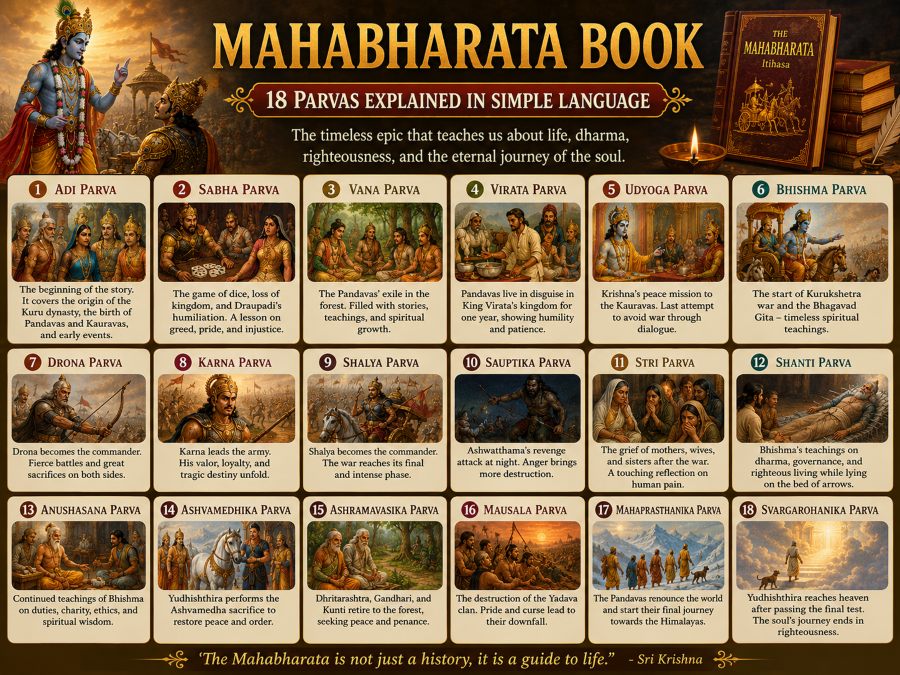
The Bhagavad Gita, meaning “The Song of the Lord,” is a spiritual dialogue between Lord Krishna and Arjuna, a warrior facing a deep moral and emotional crisis. It consists of 700 verses divided into 18 chapters and appears within the epic Mahabharata.
However, the Bhagavad Gita is much more than a historical or religious text. It addresses universal human questions such as:
- Who am I?
- What is my purpose?
- Why do I suffer?
- How should I act in difficult situations?
For modern beginners, the Gita offers clarity without complexity.
The Battlefield of Kurukshetra: A Symbol of Modern Life
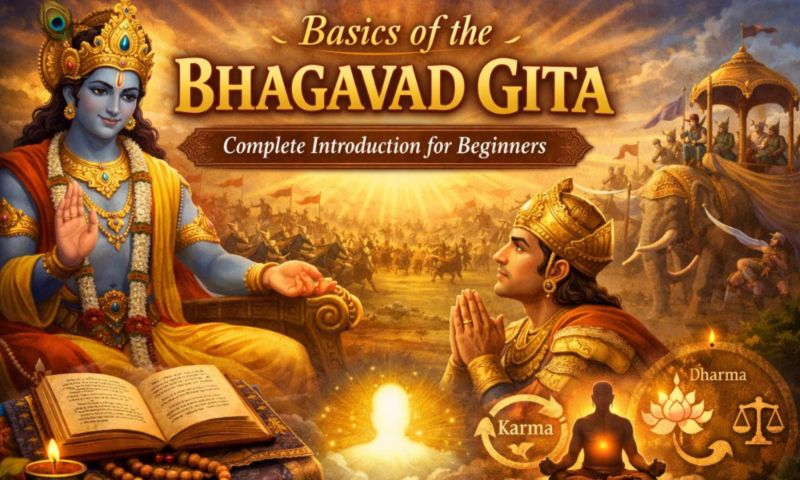
The setting of the Bhagavad Gita is the battlefield of Kurukshetra, just before a great war. Arjuna, despite being strong and skilled, becomes overwhelmed when he sees his own relatives, teachers, and friends on the opposing side. He experiences anxiety, fear, confusion, and emotional collapse.
This battlefield represents modern life itself:
- Career pressure
- Family responsibilities
- Moral conflicts
- Emotional attachments
- Fear of failure and loss
Krishna’s teachings guide Arjuna—and modern readers—through these inner conflicts.
Who Is Krishna in the Bhagavad Gita?
In the Bhagavad Gita, Krishna is not portrayed merely as a mythological figure. He represents:
- The Supreme Consciousness
- The source of universal wisdom
- The inner guide (Paramatma) within every being
Krishna does not command blindly. He explains, reasons, and empowers Arjuna to understand reality and make conscious decisions. This approach makes the Bhagavad Gita especially appealing to modern thinkers.
The Core Purpose of the Bhagavad Gita
The main purpose of the Bhagavad Gita is to liberate the human mind from confusion and fear. It teaches how to live responsibly in the world while remaining spiritually grounded.
For modern beginners, the Gita helps to:
- Reduce anxiety and stress
- Improve decision-making
- Balance material life and spirituality
- Develop inner strength and clarity
Structure of the Bhagavad Gita: A Beginner Overview
The Bhagavad Gita is divided into 18 chapters, each focusing on a specific spiritual theme:
- Despair and confusion
- Knowledge of the soul
- Selfless action (Karma Yoga)
- Knowledge with renunciation
- Detachment from results
- Meditation and mind control
- Knowledge of the Supreme
- Eternal reality
- Supreme spiritual knowledge
- Divine manifestations
- Universal form of God
- Devotion (Bhakti Yoga)
- Matter and soul
- Three modes of nature
- The Supreme Person
- Divine and negative qualities
- Types of faith
- Liberation and surrender
Together, these chapters form a complete spiritual system.
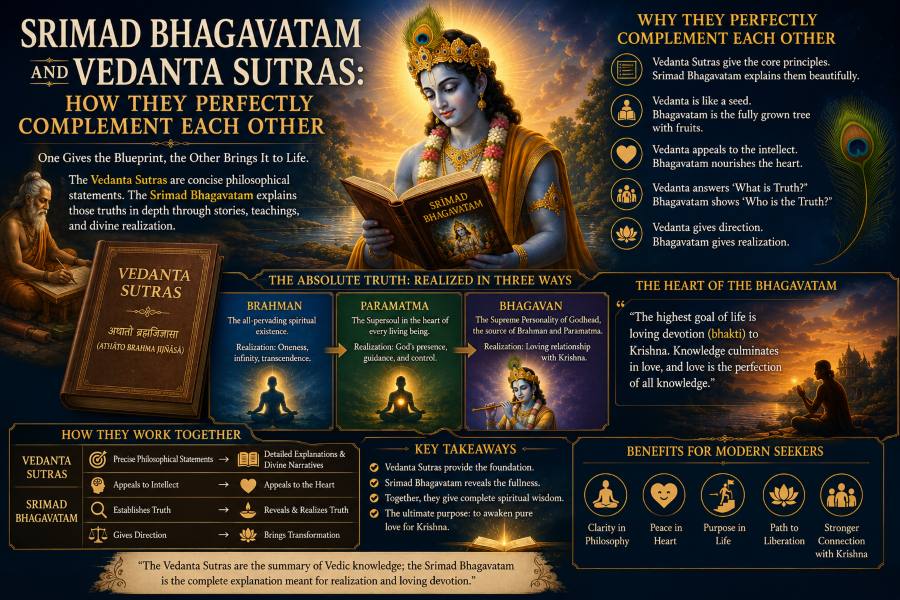
READ ALSO:- Srimad Bhagavatam by Ved Vyasa
Fundamental Teachings of the Bhagavad Gita
1. You Are Not the Body
One of the most revolutionary teachings of the Bhagavad Gita is that we are not the physical body. The body is temporary, but the soul is eternal.
This realization helps modern beginners:
- Overcome fear of death
- Reduce excessive attachment
- Handle loss and change with maturity
2. Karma Yoga: Working Without Stress
Krishna introduces Karma Yoga, the path of action without attachment to results.
In modern terms, this means:
- Do your work sincerely
- Focus on effort, not anxiety
- Accept success and failure calmly
This teaching is extremely useful for professionals, students, and entrepreneurs.
3. Dharma: Living with Responsibility
Dharma means performing one’s duty according to one’s role and conscience. The Bhagavad Gita teaches that running away from responsibility creates inner conflict.
For modern life, Dharma includes:
- Honest work
- Ethical living
- Responsibility toward family and society
4. Bhakti Yoga: Devotion in Daily Life
Among all paths, Krishna highlights Bhakti Yoga—the path of devotion—as the most accessible in the modern age.
Bhakti does not require renunciation. It involves:
- Remembering Krishna
- Chanting divine names
- Offering daily work with love
- Developing humility and gratitude
Bhakti transforms ordinary life into spiritual practice.
5. The Three Modes of Nature (Gunas)
The Bhagavad Gita explains that human behavior is influenced by three qualities:
- Sattva (Goodness): Clarity, peace, wisdom
- Rajas (Passion): Desire, ambition, restlessness
- Tamas (Ignorance): Laziness, confusion, darkness
Understanding these modes helps modern beginners improve habits, lifestyle, and mindset.
Meditation and Mental Health in the Bhagavad Gita
Krishna acknowledges that the mind is restless and difficult to control. He teaches Dhyana Yoga, emphasizing practice and detachment.
Beginner-friendly applications include:
- Short daily meditation
- Mantra chanting
- Digital detox
- Balanced routine
These practices are highly relevant for modern mental health challenges.
Life Lessons from the Bhagavad Gita for Modern People
The Bhagavad Gita offers timeless life lessons:
- Do your duty without fear
- Detach from toxic expectations
- Accept change as natural
- Cultivate inner discipline
- Live with purpose, not pressure
These teachings help modern beginners lead meaningful and balanced lives.
What Is Liberation (Moksha) According to the Bhagavad Gita?
Moksha means liberation from ignorance, fear, and repeated suffering. The Gita explains that liberation is achieved through knowledge, devotion, and surrender, not escapism.
Liberation brings:
- Inner peace
- Freedom from anxiety
- Spiritual fulfillment
Is the Bhagavad Gita Religious or Universal?
Although rooted in Hindu philosophy, the Bhagavad Gita is universal in application. It speaks to human psychology, ethics, leadership, and self-growth.
That is why it is studied by:
- Spiritual seekers
- Psychologists
- Leaders and thinkers
- Professionals worldwide
How Modern Beginners Should Read the Bhagavad Gita
For beginners:
- Read slowly, not mechanically
- Reflect on daily life situations
- Start with Chapter 2 and Chapter 12
- Use an authentic commentary-based edition
The Bhagavad Gita is a lifetime companion, not a one-time read.
Common Misunderstandings About the Bhagavad Gita
❌ It promotes violence → No
✔️ It teaches inner courage and responsibility
❌ It is outdated → No
✔️ It is timeless and practical
❌ It is only religious → No
✔️ It is a guide for conscious living
Importance of the Bhagavad Gita for Modern Beginners
In the modern world, the Bhagavad Gita provides:
- Emotional strength
- Ethical clarity
- Mental balance
- Spiritual direction
Its teachings help individuals live confidently without losing compassion.
Conclusion: The Bhagavad Gita as a Guide for Modern Life
The Bhagavad Gita is not just an ancient scripture—it is a manual for modern living. It teaches how to act responsibly, think clearly, and live spiritually without escaping daily duties.
For modern beginners, understanding the basics of the Bhagavad Gita is the first step toward inner growth, peace, and purpose.