


Caitanya Caritamrita: The Complete Guide to Lord Chaitanya’s Divine Life
Among the vast ocean of Vedic literature, very few scriptures capture the essence of divine love as beautifully as the Caitanya Caritamrita. Written in the 16th century by Krishnadasa Kaviraja Goswami, this sacred text reveals the life, teachings, and spiritual mission of Sri Chaitanya Mahaprabhu, who is revered by millions as the combined form of Radha and Krishna.
For spiritual seekers, devotees, and scholars alike, the Caitanya Caritamrita serves as both a historical account and a deep philosophical guide to the practice of Bhakti Yoga. It explains the spiritual revolution initiated by Lord Chaitanya and how His teachings transformed the religious landscape of India and eventually inspired a global devotional movement.
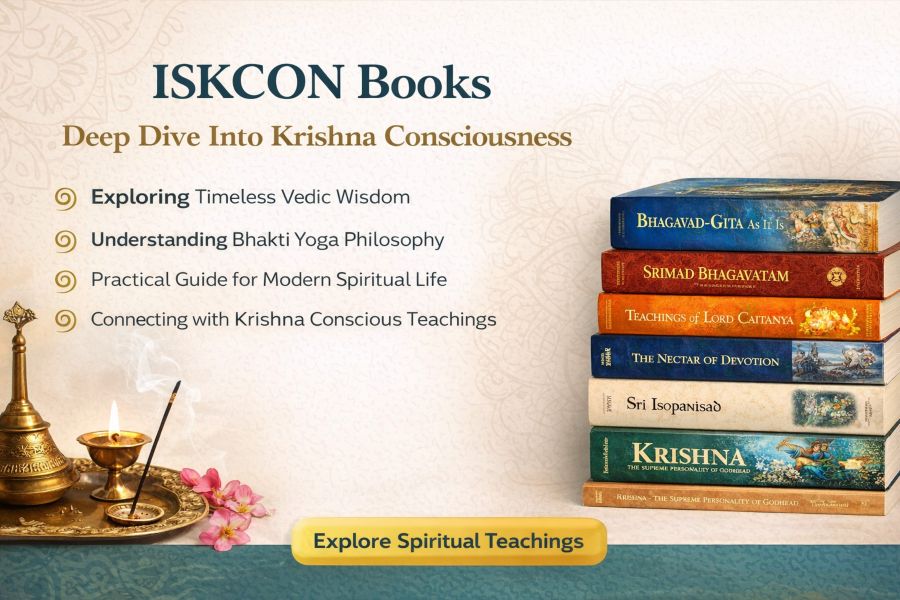
Today, many readers and devotees explore this sacred scripture through authentic editions available from the Official ISKCON Mayapur Store, which provides reliable translations and commentaries preserving the original devotional spirit of the text.
This remarkable scripture not only narrates the divine pastimes of Lord Chaitanya but also offers profound insights into the nature of pure love for Krishna. By studying this text, readers gain a deeper understanding of devotion, humility, compassion, and the ultimate purpose of human life.
Who Was Lord Chaitanya Mahaprabhu?
Lord Chaitanya Mahaprabhu appeared in 1486 in the holy town of Navadvipa in present-day West Bengal. Known in His childhood as Nimai due to His birth under a neem tree, He displayed extraordinary intelligence and spiritual qualities from an early age.
Although He initially became famous as a brilliant scholar and teacher of Sanskrit grammar and logic, His life took a dramatic spiritual turn after a pilgrimage to Gaya. Upon returning, Nimai transformed into a deeply devotional personality immersed in ecstatic love for Lord Krishna.
He began organizing congregational chanting of the holy names of Krishna, a practice known as Sankirtana, which quickly spread throughout Bengal and beyond. Through these gatherings, people experienced intense spiritual emotions and deep devotion regardless of their social or religious background.
Lord Chaitanya’s message was simple yet revolutionary: chanting the holy names of God is the most effective spiritual practice in the present age. His teachings emphasized humility, compassion, and unconditional love for Krishna.
Eventually, at the age of 24, He accepted the renounced order of life (sannyasa) and traveled extensively throughout India, spreading the message of Bhakti and inspiring countless followers.
The Author: Krishnadasa Kaviraja Goswami
The Caitanya Caritamrita was written by Krishnadasa Kaviraja Goswami, a revered saint and scholar within the Gaudiya Vaishnava tradition. He composed this masterpiece in Vrindavan during the late 16th century when he was already advanced in age.
Despite his humility and physical weakness, Krishnadasa Kaviraja produced a monumental work that combines biography, philosophy, poetry, and devotional literature.
He relied heavily on earlier accounts, especially the writings of Svarupa Damodara and Raghunatha dasa Goswami, who were direct associates of Lord Chaitanya. Because of this, the Caitanya Caritamrita is considered one of the most authentic and authoritative sources about Lord Chaitanya’s life and teachings.
What makes the book truly remarkable is the author’s deep humility. Throughout the text, Krishnadasa repeatedly expresses his unworthiness to narrate the divine pastimes of the Lord, yet he continues writing out of devotion and obedience to the Vaishnava community.
His style blends philosophy with devotion, making complex theological ideas accessible while maintaining a profound spiritual depth.
Structure of the Caitanya Caritamrita
The Caitanya Caritamrita is divided into three major sections known as lilas (pastimes). Each section reveals a different phase of Lord Chaitanya’s life and spiritual mission.
Adi-lila
The Adi-lila focuses on the early life of Lord Chaitanya and the theological foundations of His appearance. It explains the divine identity of Chaitanya Mahaprabhu as Krishna Himself appearing in the mood and complexion of Srimati Radharani.
This section also introduces many of the Lord’s intimate associates, including Nityananda Prabhu, Advaita Acharya, Gadadhara Pandit, and Srivasa Thakura. Together they form the Pancha-Tattva, representing different aspects of the Supreme Divine.
Additionally, Adi-lila explains the philosophical basis of Gaudiya Vaishnavism, particularly the concept of Achintya Bheda Abheda Tattva, which means the simultaneous oneness and difference between the soul and God.
Madhya-lila
The Madhya-lila is the largest section and describes Lord Chaitanya’s preaching activities after accepting sannyasa.
It includes His famous journey across South India, where He met many spiritual scholars, saints, and ordinary people. During these travels, He distributed the chanting of the holy name and transformed countless lives.
This section also includes important philosophical discussions, such as His conversation with Ramananda Raya, which reveals the deepest teachings about divine love and the ultimate goal of spiritual life.
Madhya-lila beautifully illustrates how Lord Chaitanya balanced profound spiritual philosophy with heartfelt devotion.
Antya-lila
The Antya-lila describes the final years of Lord Chaitanya’s life in Jagannath Puri. During this time, He experienced intense states of divine ecstasy while meditating on the love of Radha and Krishna.
His interactions with close associates like Swarupa Damodara and Ramananda Raya reveal the deepest mysteries of devotional love.
These chapters portray the pinnacle of spiritual emotion known as Mahabhava, the highest form of divine love experienced by Srimati Radharani.
Although deeply mystical, the Antya-lila inspires readers to understand the ultimate goal of spiritual life—pure, unconditional love for Krishna.
Core Philosophical Teachings of the Caitanya Caritamrita
One of the greatest strengths of the Caitanya Caritamrita is its ability to present profound philosophical truths in a devotional and accessible way.
The text explains that the ultimate purpose of life is to develop love for God, specifically Krishna. According to Lord Chaitanya, this love can be awakened through the simple practice of chanting the Hare Krishna mantra.
The scripture also introduces the concept of Achintya Bheda Abheda, a philosophy explaining the relationship between the individual soul and the Supreme Lord. The soul is both one with and different from God simultaneously—an idea that harmonizes many seemingly contradictory spiritual concepts.
Another essential teaching is humility. Lord Chaitanya taught that spiritual advancement begins with a humble mindset described in His famous verse:
“One should chant the holy name of the Lord in a humble state of mind, thinking oneself lower than the straw in the street.”
This principle emphasizes tolerance, respect for others, and constant remembrance of God.
The Caitanya Caritamrita also highlights the importance of devotional service, association with devotees, and regular chanting of the holy names.
The Global Impact of Lord Chaitanya’s Teachings
Although Lord Chaitanya lived in the 15th and 16th centuries, His teachings have had an extraordinary global influence.
Centuries after His disappearance, the message of Gaudiya Vaishnavism spread worldwide through the efforts of dedicated teachers and spiritual leaders. The chanting of the Hare Krishna mantra has now become recognized across cultures and continents.
The teachings found in the Caitanya Caritamrita continue to inspire millions of people seeking spiritual fulfillment beyond material success.
Many spiritual communities, temples, and study groups regularly read and discuss this sacred text as part of their devotional practice.
The scripture also provides a historical and theological foundation for the modern Bhakti movement, which emphasizes devotion, music, meditation, and community as paths to spiritual realization.
Why the Caitanya Caritamrita Remains Relevant Today
In today’s fast-paced and often stressful world, many people are searching for deeper meaning and inner peace. The Caitanya Caritamrita offers timeless wisdom that addresses these spiritual needs.
Its teachings emphasize compassion, humility, gratitude, and devotion—qualities that can transform both personal and social life.
Unlike purely philosophical texts, this scripture combines emotional devotion with intellectual depth, making it appealing to both scholars and everyday readers.
The message of chanting God’s holy names is particularly relevant in the modern age because it requires no complicated rituals, expensive materials, or advanced qualifications.
Anyone, regardless of background or status, can begin chanting and experience spiritual joy.
How to Study the Caitanya Caritamrita
Studying the Caitanya Caritamrita can be a deeply transformative experience when approached with sincerity and devotion.
Many readers begin by studying the introductory chapters to understand the philosophical framework of the text. From there, they gradually explore the life events and teachings described throughout the three sections.
Reading the scripture alongside authentic commentaries can greatly enhance understanding. Many editions also include Sanskrit verses, translations, and explanations that reveal deeper layers of meaning.
Regular reading, reflection, and discussion with other devotees help bring the teachings to life and strengthen one’s spiritual practice.
Conclusion: A Spiritual Treasure for Humanity
The Caitanya Caritamrita stands as one of the most profound spiritual biographies ever written. It offers a complete portrait of Lord Chaitanya’s divine life, His revolutionary teachings, and the transformative power of devotion.
Through its pages, readers encounter not only historical narratives but also timeless spiritual wisdom capable of uplifting the heart and mind.
For those seeking a deeper connection with Krishna, this sacred text serves as both a guide and an inspiration. It reveals that the highest perfection of life lies not in wealth, power, or knowledge, but in pure love for God.
By studying the Caitanya Caritamrita, readers enter a spiritual journey that has inspired devotees for centuries and continues to illuminate the path of Bhakti for generations to come.