






Bhakti Rasamrita Sindhu: The Timeless Guide to Pure Devotion
In a world filled with distractions, stress, and constant material pursuits, the search for inner peace and spiritual fulfillment has become more important than ever. Among the many ancient texts of Vedic wisdom, Bhakti Rasamrita Sindhu stands out as a profound guide that illuminates the path of pure devotion (bhakti) with unmatched clarity and depth. For those seeking authentic spiritual literature and guidance, platforms like Mayapur Store offer access to timeless works that preserve the original teachings of devotion.
Written by Srila Rupa Goswami, a principal disciple of Sri Chaitanya Mahaprabhu, this sacred text is not merely philosophical—it is deeply experiential. It explains how a human being can transform their life through devotion to Krishna, moving from ordinary existence to divine consciousness.
What is Bhakti Rasamrita Sindhu?
Bhakti Rasamrita Sindhu, often translated as “The Ocean of the Nectar of Devotion,” is a foundational text in the Gaudiya Vaishnava tradition. It systematically explains the science of bhakti yoga, offering a structured approach to understanding devotion in its purest form.
The text is divided into four main sections (waves), each addressing a different aspect of devotional service:
- Eastern Division – Fundamentals of devotion
- Southern Division – Practices and expressions of bhakti
- Western Division – Emotional states and spiritual sentiments
- Northern Division – Highest stages of divine love
Unlike general spiritual books, this work does not rely on abstract ideas. Instead, it presents devotion as a practical, step-by-step process that can be cultivated through discipline, sincerity, and proper guidance.
The Philosophy Behind Pure Devotion
At its core, Bhakti Rasamrita Sindhu defines pure devotion (uttama bhakti) as:
“Service to Krishna that is free from all material desires, uninterrupted, and favorable.”
This definition highlights three key principles:
1. Freedom from Material Desires
True devotion is not motivated by personal gain, wealth, or even liberation. It is selfless and unconditional.
2. Continuous Practice
Bhakti is not a one-time act but a continuous engagement of the heart and mind in divine service.
3. Favorable Attitude
Devotion must be performed with love, sincerity, and a desire to please Krishna, not out of fear or obligation.
This philosophical foundation distinguishes bhakti from other spiritual paths like karma (action) and jnana (knowledge), making it both simple and deeply transformative.

Stages of Devotional Development
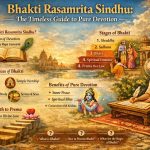
One of the most powerful aspects of Bhakti Rasamrita Sindhu is its clear explanation of how devotion evolves. It outlines a progressive journey consisting of nine stages:
- Shraddha (Faith) – Initial belief in spiritual truth
- Sadhu-Sanga (Association) – Keeping company with devotees
- Bhajana-Kriya (Practice) – Engaging in devotional activities
- Anartha-Nivritti (Purification) – Removal of unwanted habits
- Nishtha (Steadiness) – Firmness in practice
- Ruchi (Taste) – Genuine liking for devotion
- Asakti (Attachment) – Deep emotional connection
- Bhava (Emotion) – Spiritual awakening
- Prema (Pure Love) – Ultimate divine love
This structured progression makes the text extremely practical. It allows readers to identify where they stand and how to move forward.
The Science of Devotional Practices
The text describes 64 primary devotional activities, but emphasizes a few key practices as especially powerful:
Hearing (Shravanam)
Listening to Krishna’s pastimes and teachings purifies the mind and awakens devotion.
Chanting (Kirtanam)
Chanting the holy names, especially the Hare Krishna mantra, is considered the most effective method in the current age.
Remembering (Smaranam)
Constant remembrance of Krishna keeps the consciousness aligned with divine purpose.
Serving (Seva)
Engaging in service—whether physical, mental, or emotional—is central to bhakti.
These practices are not rigid rituals; they are dynamic expressions of love that gradually transform the practitioner’s consciousness.
Read Also:- ISKCON Books
Understanding Rasa: The Emotional Depth of Bhakti
A unique contribution of Bhakti Rasamrita Sindhu is its detailed explanation of “rasa,” or spiritual emotions. Rasa refers to the relationship between the devotee and Krishna, expressed in different moods:
- Shanta (Peaceful)
- Dasya (Servitude)
- Sakhya (Friendship)
- Vatsalya (Parental Love)
- Madhurya (Conjugal Love)
These rasas are not imaginary—they are deeply realized states of consciousness experienced by advanced devotees. The text explains how these emotions develop and how they elevate devotion from practice to pure love.
Why Bhakti is the Highest Path
While many spiritual traditions emphasize knowledge or renunciation, Bhakti Rasamrita Sindhu establishes devotion as the highest path for several reasons:
1. Accessibility
Bhakti does not require intellectual brilliance or extreme austerity. Anyone can practice it.
2. Universality
It transcends caste, nationality, and social status.
3. Emotional Fulfillment
Unlike dry philosophy, bhakti engages the heart, making it deeply satisfying.
4. Direct Connection with the Divine
Bhakti creates a personal relationship with Krishna, which is the ultimate goal of spiritual life.
The Role of Guru and Guidance
The text strongly emphasizes the importance of a spiritual guide (guru). Without proper guidance, the path of devotion can become confusing or misdirected.
A genuine guru:
- Teaches by example
- Helps remove doubts
- Provides spiritual discipline
- Connects the disciple to a lineage
This relationship is not based on control but on trust, respect, and spiritual growth.
Bhakti in Modern Life
One of the reasons Bhakti Rasamrita Sindhu remains relevant today is its adaptability. Even in a fast-paced modern lifestyle, its teachings can be applied practically:
- Chanting during daily routines
- Listening to spiritual lectures while traveling
- Reading sacred texts regularly
- Practicing gratitude and humility
Bhakti does not demand withdrawal from the world—it transforms how we live within it.
Common Misconceptions About Devotion
“Bhakti is only for religious people”
In reality, bhakti is a universal spiritual process, not limited to any religion.
“Devotion means blind faith”
Bhakti is based on knowledge, experience, and realization—not ignorance.
“It requires giving up everything”
Instead, bhakti teaches how to use everything in service of the divine.
The Transformational Power of Bhakti
The true impact of Bhakti Rasamrita Sindhu lies in its ability to transform:
- Mind → From anxiety to peace
- Heart → From emptiness to fulfillment
- Life → From confusion to purpose
Devotion gradually dissolves ego, purifies desires, and reveals one’s true spiritual identity.
How to Begin the Journey
Starting with bhakti does not require drastic changes. A simple approach includes:
- Chanting the Hare Krishna mantra daily
- Reading a few pages of spiritual texts
- Associating with devotees
- Practicing kindness and humility
Consistency is more important than intensity. Even small steps, when done sincerely, lead to profound transformation.
Conclusion: The Eternal Relevance of Devotional Wisdom
Bhakti Rasamrita Sindhu is not just a book—it is a spiritual roadmap that has guided seekers for centuries. Its teachings go beyond theory, offering a practical and deeply emotional path to connect with the divine.
In a time when people are searching for meaning, purpose, and peace, this timeless guide provides answers that are both simple and profound. By embracing the principles of pure devotion, anyone can experience a life filled with clarity, love, and spiritual fulfillment.
The ocean of devotion described in this text is vast, but even a single drop has the power to transform one’s entire existence.
Frequently Asked Questions (FAQs)
1. What is Bhakti Rasamrita Sindhu?
Bhakti Rasamrita Sindhu is a classical Vedic text written by Srila Rupa Goswami that explains the science of devotional service (bhakti) in a structured and practical way. It is considered one of the most important scriptures in the Gaudiya Vaishnava tradition.
2. What does “Bhakti Rasamrita Sindhu” mean?
The term translates to “The Ocean of the Nectar of Devotion.” It symbolizes the vast and deep nature of devotional service, where each drop represents spiritual bliss and divine love.
3. Who wrote Bhakti Rasamrita Sindhu?
The book was written by Srila Rupa Goswami, a key disciple of Sri Chaitanya Mahaprabhu and one of the most respected acharyas in the bhakti tradition.
4. What is the main teaching of Bhakti Rasamrita Sindhu?
The core teaching is pure devotion (uttama bhakti), which means serving Krishna without material desires, with continuous effort, and with a loving attitude.
5. How is Bhakti Rasamrita Sindhu relevant today?
Its teachings are timeless and can be applied in modern life through simple practices like chanting, reading spiritual texts, and living with mindfulness and devotion.
6. What are the stages of devotion explained in the book?
The text outlines nine stages of bhakti, starting from faith (shraddha) and progressing to pure love (prema), providing a clear roadmap for spiritual growth.
7. What is ‘rasa’ in Bhakti Rasamrita Sindhu?
Rasa refers to the spiritual emotions or relationships a devotee experiences with Krishna, such as friendship, love, or service.
8. Is Bhakti Rasamrita Sindhu only for advanced devotees?
No, it is suitable for both beginners and advanced practitioners. Beginners can understand the basic principles, while advanced readers can explore its deeper emotional and philosophical insights.
9. How can I start practicing bhakti based on this book?
You can begin with simple steps like chanting the Hare Krishna mantra, reading devotional literature, associating with devotees, and engaging in selfless service.
10. Why is bhakti considered the highest spiritual path?
Bhakti is considered the highest path because it creates a direct, personal relationship with the Divine and offers both spiritual knowledge and emotional fulfillment.
11. How many devotional practices are described in the text?
Bhakti Rasamrita Sindhu describes 64 devotional practices, with emphasis on key activities like hearing, chanting, remembering, and serving.
12. Can Bhakti Rasamrita Sindhu help in reducing stress and anxiety?
Yes, by focusing the mind on spiritual practices and divine remembrance, it helps bring inner peace, clarity, and emotional balance.